
Most small business owners discover their financial issues at the most inconvenient times, such as when taxes are due, a loan is denied, or they unexpectedly run out of cash. The main cause is poor or nonexistent bookkeeping.
Every business that is financially sound needs to keep good records. It’s the process of recording, organizing, and tracking every dollar that moves in and out of your business. Without it, you’re essentially operating blindly.
It’s important to know that bookkeeping and accounting are not the same thing. Bookkeeping keeps track of everyday money matters, like bills, costs, payroll, and reconciliations. Tax planning, forecasting, and financial analysis are all examples of how accounting translates that data into strategy. One thing leads to another.
This article has all you need to know about bookkeeping services, including a full list, real-life examples per business type, and a clear breakdown to help you make the correct choice.
What Do Bookkeeping Services Do?
Professional bookkeeping services make sure that your business records are accurate, organized, and up-to-date. A bookkeeper keeps track of every dollar that comes in and goes out, so you always know how much money your business has.
Bookkeeping takes care of the daily tasks, like keeping track of transactions, balancing bank accounts, handling invoices, and processing paychecks. Accounting goes a step further by looking at that information, making tax plans, and giving advice on money matters. Bookkeeping is the first step. It is built on top of accounting.
Who Offers Bookkeeping Services?
There are three ways to get these services. A freelance bookkeeper works alone and usually only for small firms on a part-time or monthly basis. A bookkeeping firm has a whole team with more knowledge and the ability to grow. An in-house bookkeeper is a full-time employee of your organization. This gives you greater control, but it costs more.
The best decision for you will depend on how big your firm is, how many transactions you do, and how much money you have.
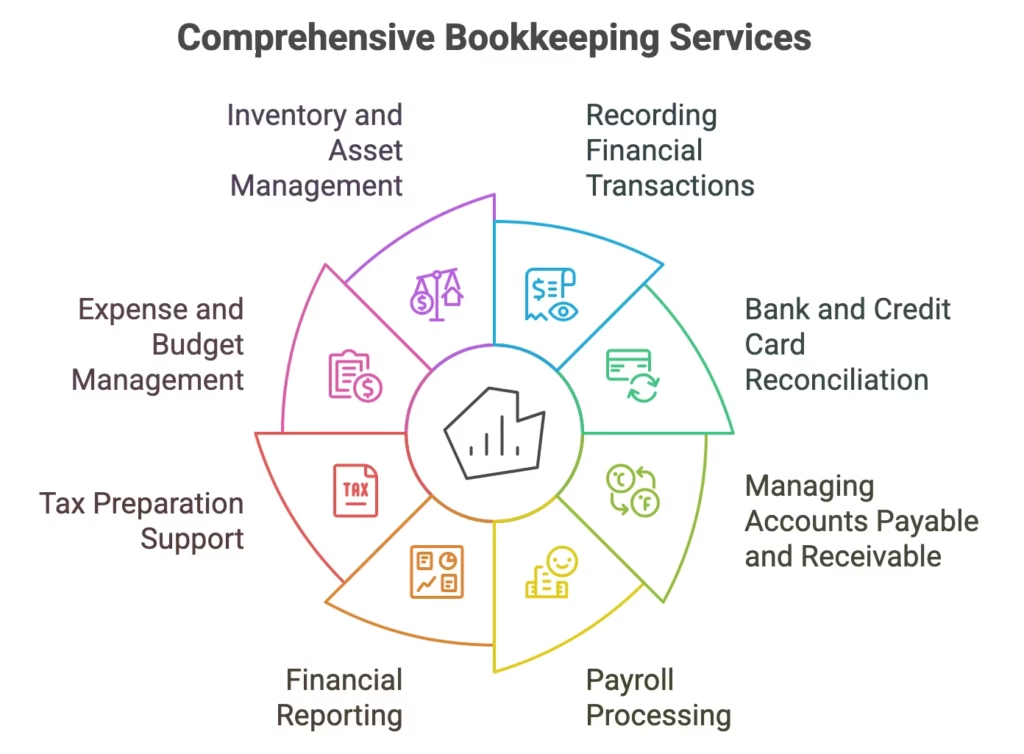
A Full List of Bookkeeping Services
1. Managing Accounts Payable
Accounts payable is all the money your organization owes, like bills from suppliers, invoices from vendors, and subscription fees. A bookkeeper keeps track of these debts, plans payments, and makes sure that nothing is missed. This service is essential for any business that regularly purchases goods from suppliers or engages with multiple vendors.
2. Managing Accounts Receivable
This is the money that people owe your firm. Bookkeepers keep track of unpaid bills, follow up on late payments, and keep track of all the money coming in.
For example, a marketing business sends out 15 invoices to clients every month. If you don’t handle your accounts receivable well, it’s easy to overlook a $3,000 payment that is 45 days late. A bookkeeper sees that before it turns into a cash flow concern.
3. Reconciliation of Bank Accounts
Your bank balance and your books need to match every month. The process of bank reconciliation is to compare the two and fix any differences. It identifies errors, flags prohibited transactions, and safeguards your financial data. There are no exceptions; every firm requires this.
4. Processing Payroll
Sending out paychecks is only one part of payroll processing. It includes figuring out how much to pay employees, handling tax withholdings, processing deductions, and reporting payroll taxes on schedule. One error on the payroll might cost you money or make your staff angry. Any business with employees, even just one, needs to keep track of their compensation correctly.
5. Making Financial Statements
The Profit and Loss statement, the Balance Sheet, and the Cash Flow statement are three reports that every business owner should know how to read. A bookkeeper makes them on a regular basis so you can assess how well your firm is doing. You also need these papers when you want to get a loan or get investors interested.
6. Keeping Track of and Sorting Expenses
You need to keep track of all your business expenses and put them in the correct group, like travel, software, rent, or marketing. Sorting your business expenses into the appropriate categories maintains your books organized, simplifies tax preparation, and enables you to understand your financial expenditures.
For example, a SaaS firm that spends $8,000 a month on tools, contractors, and ads needs to make sure that every dollar is in the right category. If not, their burn rate calculation would be wrong and their investor reports will be incorrect.
7. Help in Preparing Taxes
Your accountant, not your bookkeeper, files your taxes. But they do the hard work that makes it possible to file taxes. You gave your accountant all your clean records, categorized spending, and reconciled accounts so they don’t have to start over. At tax time, having messy books might cost you hundreds of extra hours of work from your accountant.
8. Keeping Track of Inventory
For firms that sell things, inventory is a big asset that is listed on the books. Bookkeepers record what comes in, what goes out, and how much the current stock is worth. Keeping accurate records of your inventory stops you from ordering too much, running out of product, and making mistakes with your money. This is very important for retail retailers, wholesalers, and online stores.
9. Keeping the General Ledger Up to Date
The general ledger keeps track of all the money that comes in and goes out of your business. This is where all of your sales, expenses, and transfers are. Bookkeepers make sure that the data is always up-to-date and correct so that all other financial reports can use it.
For instance, a small construction company with more than 20 ongoing projects needs a well-kept ledger to keep track of the prices of each task. They can’t identify which projects are making money and which ones are costing them money without it.
10. Managing Cash Flow
Every firm needs cash flow to stay alive. You can show a profit on paper and still run out of money. Bookkeepers keep an eye on funds coming in and leaving out, make estimates, and let you know about possible deficiencies before they happen. This service is especially important for seasonal businesses and fast-growing startups, because the timeliness of payments may make or break a business.
Different Types of Businesses That Need Bookkeeping Services
Not all businesses need the same way to keep track of their books. This is what a useful bookkeeping service looks like for different kinds of businesses.
Self-Employed People and Freelancers
Keeping track of expenses, sending out invoices, and getting help with basic tax preparation are the most important things. Freelance designers and consultants often need someone to manage their finances, tracking expenses and client payments to avoid any nasty surprises come tax season. A simple bookkeeping program handles all of this.
Small Stores
Retail becomes more complicated. If you have employees, you have to deal with inventory, daily sales reconciliation, paying suppliers, and payroll. A small store needs to keep track of its accounts payable, inventory, bank statements, and payroll every month without fail. If you miss even one of these, it makes things worse very quickly.
Online Stores
E-commerce companies have a special problem: they have to deal with several streams of income, payment processors, refunds, and platform fees all at once. In addition to regular reconciliation, a Shopify or Amazon seller needs to be able to categorize their expenses, keep track of their inventory, and manage their cash flow. Professional bookkeeping is a must, not a luxury, because of the number of transactions.
New Businesses
Startups need bookkeeping that can grow with them. At first, it’s important to have clean financial accounts and good cash flow management, especially if you’re trying to get investors or money. As the team gets bigger, keeping the general ledger and processing payroll become quite important. Investors won’t give money to businesses with sloppy books.
Businesses That Offer Services
Accounts receivable are what agencies, consultancies, and professional service organizations depend on to stay in business. Being paid on time is the most important thing. Managing accounts receivable, preparing financial statements, and keeping track of expenses are their top bookkeeping priorities. This keeps margins clear and cash flow predictable.
What Is the Difference Between Accounting and Bookkeeping Services?
A lot of business owners use these words to mean the same thing. They shouldn’t. Knowing the difference will help you avoid employing the wrong individual or paying for services you don’t need.
| Bookkeeping | Accounting | |
| Focus | Keeping track of transactions | Looking at financial data |
| Things to do | Payroll, reconciliation, and billing | Planning for taxes, making predictions, and audits |
| Who does it? | Bookkeeper | Accountant / CPA |
| How often | Every day, week, or month | Every month, every three months, or every year |
| Getting a certificate | Not needed | Necessary (CPA license) |
| Price | Less | More |
When Do You Only Need Bookkeeping?
If your firm is tiny, the transactions are simple, and you just need clean, structured records, a bookkeeper is all you need. This is true for most small firms and freelancers, especially when they are first starting out.
When Do You Need Both?
You need both if your firm starts to grow, whether it means adding people, dealing with complicated taxes, looking for investors, or moving into new markets. A bookkeeper makes sure the records are neat. An accountant uses that information to make smart choices and make sure that taxes are paid correctly.
CPAs and Bookkeepers
A CPA is a licensed expert who can speak for you in front of tax authorities, give you audited financial statements, and give you legal tax advice. A bookkeeper can’t. But a good bookkeeper makes your CPA’s job faster, cheaper, and more accurate. They do their finest work when they are together.
Professional Bookkeeping Services Available
Basic Packages
Basic bookkeeping solutions usually include reconciling bank accounts, sorting expenses, and making monthly financial statements. These are made for people who work alone or run very tiny firms with few transactions.
Full-Service Deals
Full-service bookkeeping goes a lot deeper. This includes everything in the basic plan, plus managing accounts payable and receivable, processing payroll, helping with tax preparation, reporting on cash flow, and giving you access to a personal bookkeeper. Businesses that are growing and have employees usually need this level of service.
Bookkeeping in the Cloud vs. Bookkeeping in Person
Using cloud-based bookkeeping tools like QuickBooks Online, Xero, or FreshBooks has become the norm. You can view your books at any moment, your bookkeeper can operate from wherever, and everything is backed up automatically. For most firms today, using the cloud is the better and cheaper option. It’s important to ask if the service you’re thinking about still just works with desktop software and doesn’t have access to the cloud.
Which Bookkeeping Services Should Your Business Use?
By Size of Business
- Solo or freelancer: help with keeping track of expenses, sending invoices, and doing basic tax prep.
- Small business with 1 to 10 employees: add bank reconciliation, payroll processing, and monthly financial statements.
- Businesses with 10 to 50 employees: full-service bookkeeping includes managing accounts receivable and payable, keeping an eye on cash flow, maintaining the general ledger, and sending out regular financial reports.
- Growing Business (50+ employees): At this point, you probably need both a bookkeeping company and a CPA or CFO to work together.
Things to Think About Before Hiring
- Are they experts in firms like mine?
- What software do they use, and will it work with the tools I already have?
- How often will I get new reports?
- Who is my main point of contact?
- What will happen if my bookkeeper quits?
Things to Stay Away From
- No clear prices or extra costs that show up on the first bill
- Promises to “fix” your books without going through the right onboarding process
- No access to the cloud or reports in real time
- Bookkeeper who wants to do your taxes without a CPA license as well
- No examples or references from firms in your field
How to Pick the Best Bookkeeping and Accounting Services
In-House vs. Outsourced
You have full control and can get to your in-house bookkeeper right away. But it costs money in the form of salary, benefits, and overhead. Most small and medium-sized firms can’t afford this until they hit a specific number of transactions.
You can get professional bookkeeping help for a lot less money by hiring a corporation or a freelancer. You only pay for what you need, and you can hire more people when you need them without having to pay for a full-time employee. For most small firms, outsourcing is the best place to start.
Software Tools You Should Know
- QuickBooks Online works for businesses of all sizes, connects to practically anything, and most bookkeepers know how to use it.
- Xero is a popular choice for organizations and firms that are growing. A clean interface, good reporting, and great for organizations that deal with more than one currency.
- FreshBooks is great for freelancers and organizations that provide services. Easy invoicing and keeping track of expenses without the hassle.
Before you hire someone, be sure they can operate with your preferred platform and that you can export your data if you ever move providers.
Things to Think About When It Comes to Cost
The cost of bookkeeping depends on how many transactions you have, what services you need, and whether you do it in-house or hire someone else to do it. Most freelancers charge between $300 and $800 a month for basic services. Businesses that offer full-service packages can charge anywhere from $500 to $2,500 per month, depending on how complicated the firm is. In the US, the typical income for an in-house bookkeeper is between $45,000 and $55,000 a year, not including perks.
The proper question isn’t “what’s the cheapest option?” It’s “what’s the cost of NOT having accurate books?” The answer to that question is almost always higher.
In Conclusion
Bookkeeping is not a glamorous job. But it’s what makes the difference between a firm that lives and one that dies. Having the correct accounting services in place gives you clarity, confidence, and control over your finances, whether you’re a freelancer keeping track of your costs or a growing business keeping track of payroll, inventory, and investor reporting.
This list of bookkeeping services is a good place to start. Make sure the services fit your business size, ask the correct questions before hiring, and don’t wait until tax season to get your books in order.
Are you ready to get your books in order? Explore our dedicated professional bookkeeping services or get in touch with us today so we can help you create a system that really works for your business.
📚 Struggling with your books?
Let our ACCA-qualified team handle everything — bookkeeping, taxes, payroll and more.
- ✅ No contracts
- ✅ Cancel anytime
- ✅ Free 30-min consultation
No obligation. No credit card required.
One Response